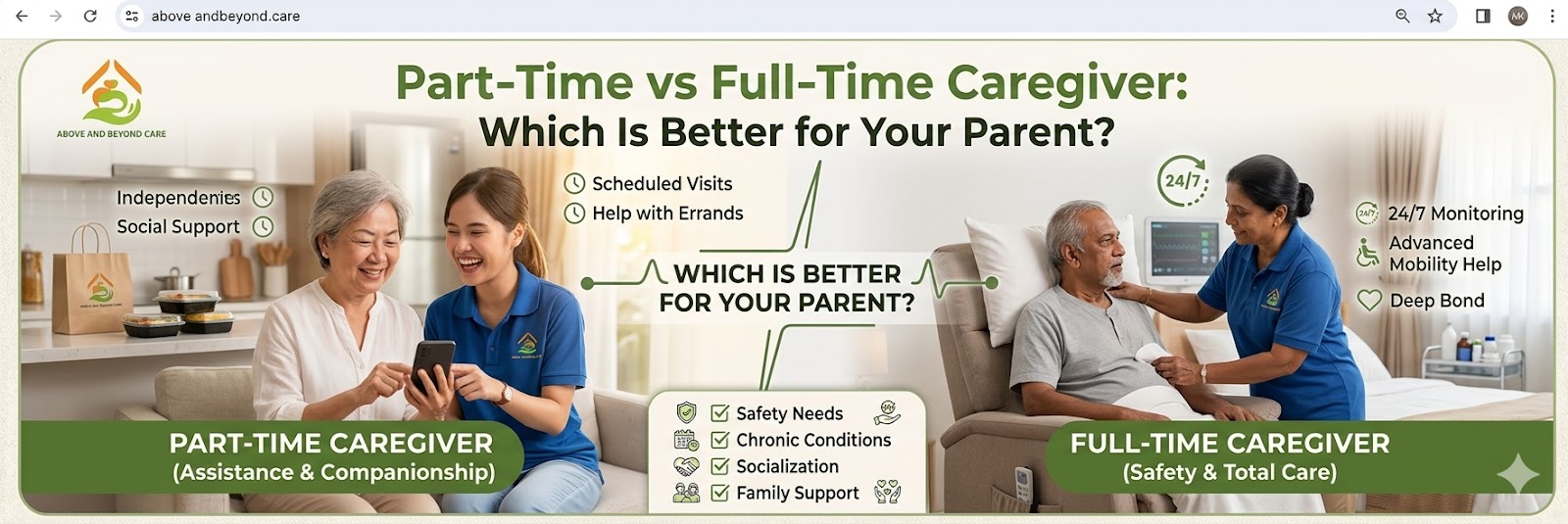
Choosing between part-time and full-time care is a significant decision that depends on your parent’s medical needs, your family’s schedule, and your budget. There is no one-size-fits-all answer, but evaluating the specific “care gaps” in your daily routine will help you decide.
Here is a breakdown to help you determine which model fits your current situation.
1. Part-Time Caregiver: The “Support System”
Part-time care typically ranges from a few hours a week to several hours a day. It is ideal for seniors who are still largely independent but need help with specific tasks.
-
Best for:
-
Respite Care: Giving primary family caregivers a much-needed break.
-
Specific Tasks: Help with bathing, grocery shopping, or transport to doctor appointments.
-
Socialization: Seniors who are lonely and would benefit from a few hours of companionship.
-
-
The Pros:
-
Cost-Effective: You only pay for the hours you truly need.
-
Flexibility: Can be scaled up as needs change over time.
-
-
The Cons:
-
Gaps in Care: If an emergency happens outside of scheduled hours, the senior is alone.
-
Consistency: Part-time caregivers may have multiple clients, making scheduling shifts slightly more complex.
-
2. Full-Time Caregiver: The “Complete Solution”
Full-time care (often 8–12 hours a day or 24/7 live-in) is designed for seniors with chronic conditions, high fall risks, or advanced mobility issues.
-
Best for:
-
Advanced Needs: Patients with Dementia, Alzheimer’s, or those who are bedbound.
-
Safety: Seniors at high risk of falling or wandering.
-
Post-Hospitalization: When a patient needs around-the-clock monitoring for a period of weeks.
-
-
The Pros:
-
Maximum Safety: Immediate assistance is available for emergencies or middle-of-the-night needs.
-
Deep Bonds: Spending significant time together allows the caregiver to understand the senior’s “baseline” and spot subtle health changes.
-
-
The Cons:
-
Higher Cost: This is a significant monthly financial commitment.
-
Privacy: Having someone in the home 24/7 can be a major adjustment for the parent and the family.
-